


Automation in Logistics
Modern logistics is undergoing a remarkable transformation. When we think of innovation, we usually picture autonomous forklifts, robotic order pickers, or advanced automated storage and retrieval systems (AS/RS). This physical automation is developing at an extraordinary pace, significantly increasing efficiency while reducing human error to almost zero.
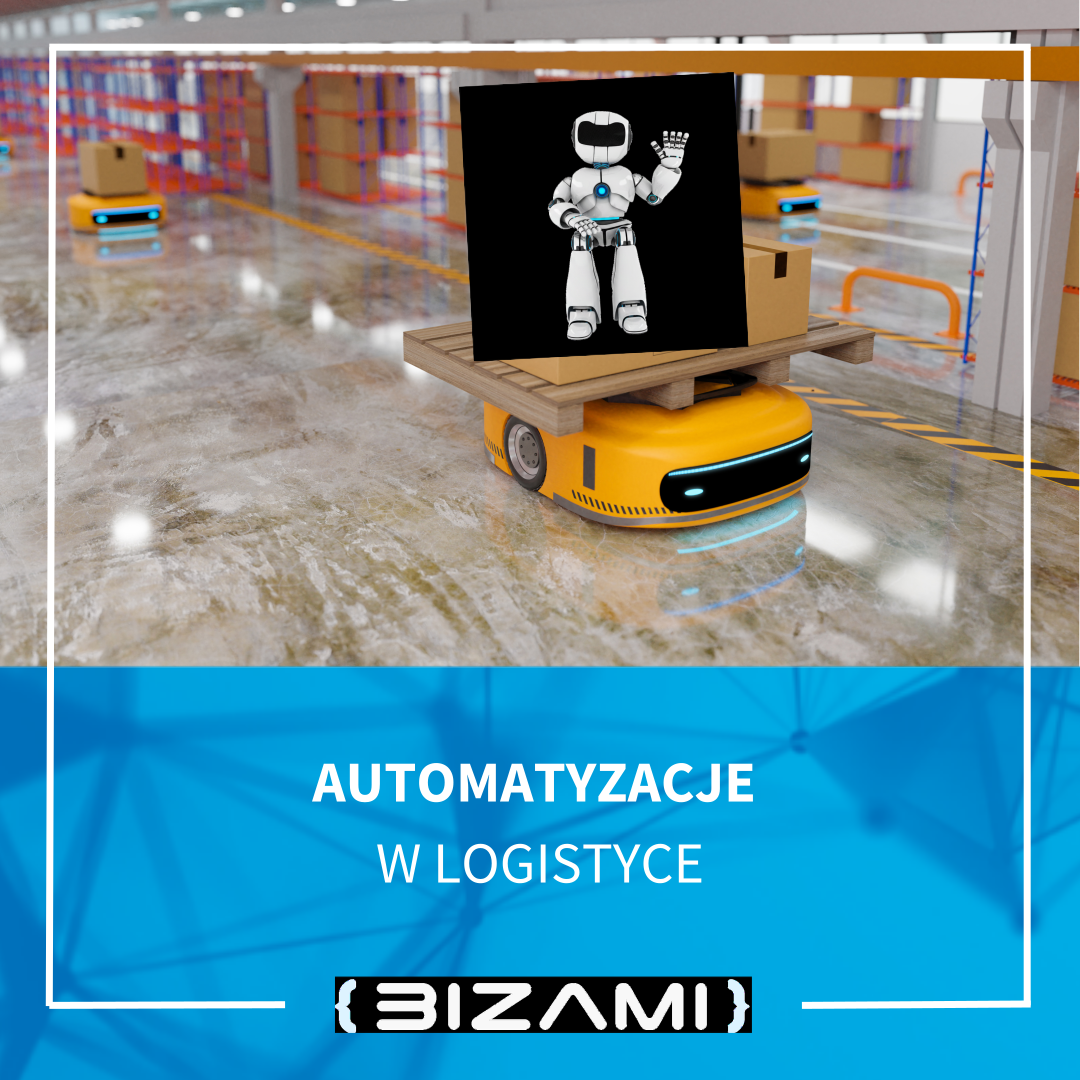
However, robots, conveyors, and automated warehouses are only one side of the equation. The real challenge—and the true revolution—begins much earlier, where strategic purchasing decisions are made. After all, even the most advanced forklift cannot create value if it is transporting products that will sit idle in the warehouse for months.
Holiday Season: The Ultimate Supply Chain Stress Test
Most companies experience this challenge most acutely during the summer holiday season. As employees begin taking vacations, purchasing departments face the same recurring question: How can purchasing operations continue smoothly when key employees are away?
In the traditional model, critical knowledge about what to order, when to order it, and from which supplier often "goes on vacation" with the employee. The person covering their responsibilities is left with countless Excel spreadsheets, trying to reconstruct complex purchasing decisions. The risk of mistakes increases significantly, leading to two costly outcomes: either excessive inventory that ties up working capital, or product shortages that disrupt operations and customer service.
This clearly demonstrates that process automation should not stop at the warehouse floor. It should also extend to the analytical and decision-making processes within the purchasing office.
The Digital Brain of Logistics: Algorithms Ensuring Business Continuity
Implementing modern inventory management software brings automation to the strategic level. It removes the most repetitive and time-consuming analytical work from purchasing teams, allowing them to focus on supervision rather than calculations.
The key benefits of such solutions—during holiday periods and throughout the entire year—include:
- Automated Purchase Recommendations Next-generation inventory management systems automatically analyze sales history, inventory levels, logistics constraints, supplier lead times, and purchasing costs to generate optimized purchase recommendations. The role of the purchaser—even someone temporarily covering the position—is reduced to reviewing and approving the proposed orders. There is no need to perform complex calculations manually.
- Dynamic Safety Stock Optimization Intelligent algorithms continuously recalculate optimal safety stock levels for every product, automatically adapting to changes in demand, supply conditions, seasonality, and market anomalies.
- Consistently High Product Availability Through precise demand analysis and inventory optimization, companies can maintain consistently high product availability—often exceeding 98% service levels—while avoiding both stock shortages and unnecessary overstocking.
Conclusion
Combining physical warehouse automation with intelligent, algorithm-driven inventory management is one of the most effective ways to reduce operating costs, improve supply chain resilience, and release capital tied up in excess inventory.
Perhaps even more importantly, it makes purchasing processes far less dependent on individual employees. Organizational knowledge remains within the system rather than with a single person, enabling procurement teams to operate smoothly, consistently, and confidently—365 days a year.